What is 40-grit sandpaper used for?
What is 40-grit sandpaper used for?
In the hierarchy of surface preparation, 40-grit sandpaper occupies a critical, albeit aggressive, niche. Often misunderstood by novices as merely a tool for rapid material removal, professional craftsmen and industrial operators recognize 40-grit as a specialized instrument for heavy-duty stock removal, deep leveling, and initial profiling.
The primary function of 40-grit is not smoothing; it is shaping. It is the equivalent of a roughing chisel or a coarse file, translated into a flexible abrasive format.
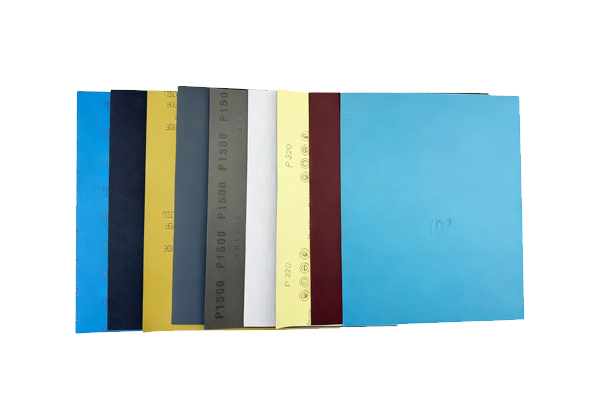
Primary Applications in Woodworking
In professional woodworking, 40-grit is rarely used for final surface preparation of visible joinery. Instead, it is the go-to solution for dimensional leveling and defect eradication.
Flattening Rough Lumber: When processing rough-sawn timber, significant cupping, twisting, or bowing may exist. While a jointer or planer is the primary tool for flattening, 40-grit belt sanders or orbital sanders are employed to blend planer marks or address areas inaccessible to stationary machinery. It efficiently bridges the gap between uneven surfaces, creating a uniform plane before moving to 60 or 80 grit.
Glue Squeeze-Out and Adhesive Removal: Cured adhesives, particularly epoxies and polyurethane glues, can be exceptionally hard. 40-grit abrasives cut through these residues rapidly without loading up (clogging) as quickly as finer grits, provided the correct backing material is used.
Contouring and Shaping: For sculptural woodwork or chair making, 40-grit is essential for rapid contouring. It allows the craftsperson to remove substantial volume to achieve the desired ergonomic or aesthetic curve before refining the shape with progressively finer grits.
Decking and Exterior Structures: In exterior applications where a glass-like finish is unnecessary, 40-grit is often the final step. It opens the wood grain sufficiently for deep penetration of stains and sealers while removing weathered gray fibers and splinters from pressure-treated lumber.
Metalworking and Fabrication Roles
In the realm of metal fabrication, 40-grit serves a more aggressive purpose, often bordering on grinding.
Weld Bead Leveling: One of the most common professional uses is the rapid reduction of high weld beads. Before a weld can be blended seamlessly into the base metal, the bulk of the excess filler material must be removed. 40-grit flap discs or fiber discs on angle grinders perform this task efficiently, minimizing heat buildup compared to grinding wheels while maintaining a high cut rate.
Rust and Scale Removal: Heavy oxidation, mill scale on hot-rolled steel, and thick paint layers require coarse abrasion. 40-grit strips away these contaminants down to bare metal, providing a clean anchor profile (often referred to as a “white metal” or “near-white metal” standard depending on the subsequent grit progression) essential for coating adhesion.
Deburring Heavy Edges: After plasma cutting or shearing thick plate metal, sharp, dangerous burrs remain. 40-grit abrasives quickly knock down these edges, rendering the part safe for handling and ready for secondary edge radiusing.
Material Science and Selection
The efficacy of 40-grit sandpaper is heavily dependent on the abrasive mineral and the backing material.
Abrasive Minerals: For hardwoods and metals, Zirconia Alumina is the professional standard. It is a self-sharpening grain that fractures under pressure to reveal fresh cutting edges, extending the life of the abrasive significantly compared to standard Aluminum Oxide. Silicon Carbide is generally reserved for wet sanding applications on composites or stone, though less common at 40-grit for general purpose use due to its brittleness.
Backing Weight: At 40-grit, the forces exerted are substantial. A heavy backing, such as X-weight or Y-weight cloth, is mandatory for belt and disc applications to prevent tearing. Paper backings are generally restricted to sheet sanding where lower pressure is applied.
Coating Density: 40-grit papers often utilize an open coat structure, where abrasive grains cover only 50-70% of the surface. This spacing is crucial for preventing clogging when sanding softwoods, resins, or paints, allowing swarf (dust) to escape the cutting zone.
News
Contact Us
Contact: Kamel Abrasives
Phone: +86 13663827325
Whatsapp: +86 13663827325
E-mail: sales@kamel.com.cn
Add: High Technology Area, Zhengzhou, Henan, China