Does wet sanding make it smoother?
Does wet sanding make it smoother?
When it comes to achieving a flawless, smooth surface on wood, metal, plastic, or automotive finishes, the debate between wet sanding and dry sanding often arises.
To understand why wet sanding enhances smoothness, we first need to break down how sanding works in general. Sanding relies on abrasive particles (embedded in sandpaper) to remove surface material, leveling uneven areas, scratches, or blemishes. Dry sanding, while convenient, generates significant dust from the abraded material. This dust can clog the sandpaper’s grit, reducing its effectiveness and causing it to “skid” across the surface rather than cut evenly.
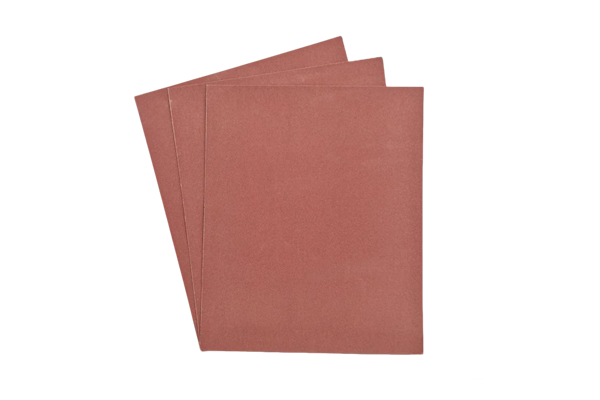
Wet sanding eliminates these issues by introducing water (or a specialized lubricant) into the process. The water serves three critical purposes that directly contribute to a smoother finish. First, it acts as a lubricant, reducing friction between the sandpaper and the surface. This allows the abrasive grit to glide more evenly, cutting through material consistently without skipping or gouging. Reduced friction also prevents the sandpaper from overheating, which is particularly important for heat-sensitive materials like plastic or clear coats—overheating can melt or distort the surface, creating new imperfections.
Second, water washes away dust and debris in real time. As the sandpaper grinds away material, the water carries the particles away from the surface and the sandpaper’s grit. This prevents clogging, ensuring the abrasive remains sharp and effective throughout the process. Clogged sandpaper is a major culprit behind rough, uneven finishes in dry sanding; by keeping the grit clean, wet sanding maintains a consistent cutting action that levels the surface uniformly. The washed-away debris also eliminates the risk of dust particles being pressed back into the surface, which can create micro-scratches.
Third, wet sanding produces finer, less visible scratches. When sanding dry, the abrasive particles can fragment, creating smaller, irregularly shaped bits that scratch the surface in random directions. Water softens the edges of these fragmented particles and cushions their impact, resulting in scratches that are narrower and shallower. These fine scratches are far less noticeable than the deeper, wider marks left by dry sanding, and they can be easily buffed or polished out to achieve a mirror-like finish. This is why wet sanding is the preferred method for finishing automotive paint, guitar bodies, or high-gloss wood furniture.
While wet sanding delivers superior smoothness, it is not a one-size-fits-all solution. Its effectiveness depends on the material, the desired finish, and proper technique. For example, wet sanding works exceptionally well on hard surfaces like metal, glass, or cured polyurethane finishes. It is also ideal for surfaces that require a high-gloss finish, such as automotive clear coats or piano tops. However, it is not recommended for porous materials like unprimed wood, as excess water can seep into the grain, causing warping, swelling, or discoloration. In such cases, dry sanding with a dust collector is a better choice.
Proper technique is also crucial to maximizing wet sanding’s smoothness benefits. Start with a coarser grit to level major imperfections, then gradually move to finer grits (e.g., 400. 800. 1500. 2000) to refine the surface. Always keep the surface and sandpaper wet—drying out mid-process can lead to uneven scratching. Use a soft, flat sanding block to ensure even pressure; applying too much pressure can gouge the surface, while too little pressure reduces the sandpaper’s cutting power.
Another factor to consider is the type of sandpaper used for wet sanding. Wet/dry sandpaper (usually made of silicon carbide) is designed to withstand water and maintain its grit integrity. Unlike regular sandpaper, which breaks down quickly when wet, wet/dry sandpaper retains its sharpness and effectiveness, ensuring a consistent finish. For ultra-smooth results, some craftsmen use a “sanding slurry”—a mixture of water and abrasive compound—that further enhances the leveling action.
Critics of wet sanding often cite its messiness and slower pace compared to dry sanding. It does require more cleanup, as water and debris can create a slurry that needs to be wiped away. It also takes slightly longer, as the lubrication reduces the sandpaper’s cutting speed. However, for projects where smoothness is a top priority, the tradeoff is well worth it. The time saved on fixing dry sanding’s imperfections (like swirl marks or uneven surfaces) often outweighs the extra time spent wet sanding.
News
Contact Us
Contact: Kamel Abrasives
Phone: +86 13663827325
Whatsapp: +86 13663827325
E-mail: sales@kamel.com.cn
Add: High Technology Area, Zhengzhou, Henan, China