How to Select the Right Flap Disc?
How to Select the Right Flap Disc?
Flap discs are indispensable tools in metalworking, woodworking, and DIY projects, valued for their versatility in grinding, sanding, and finishing.
However, with a wide range of types, materials, grits, and sizes available, selecting the right flap disc can be daunting. The key to optimal performance lies in matching the disc to your workpiece material, project goal, and power tool.
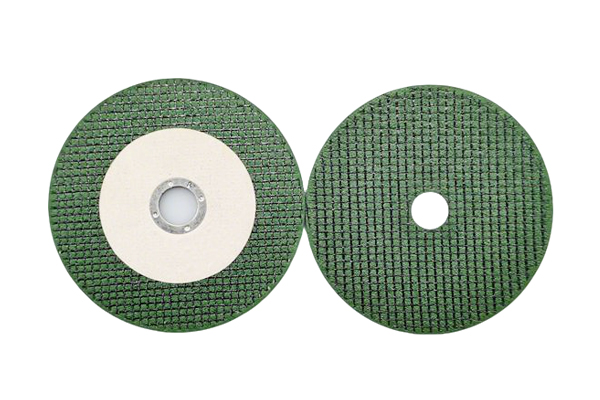
First, understand the core components of a flap disc, as they directly influence performance. The abrasive flaps, backing plate, and attachment type are the three primary elements. Abrasive flaps determine cutting power and finish quality, while the backing plate (rigid or flexible) affects maneuverability and surface contact. The attachment type (threaded, quick-change, or arbor) must align with your power tool—most flap discs are designed for angle grinders, the most common tool for this accessory. Before selecting a disc, confirm your grinder’s arbor size (typically 5/8”-11 or M14 for handheld models) to avoid compatibility issues.
Abrasive material is the most critical factor, as it dictates the disc’s suitability for different workpieces. Aluminum oxide is the most versatile and widely used abrasive, ideal for carbon steel, stainless steel, and ferrous metals. It offers excellent durability, sharpness, and heat resistance, making it perfect for heavy grinding and deburring. For harder materials like titanium, Inconel, or hardened steel, zirconia alumina is a better choice—it self-sharpens as the abrasive grains wear, maintaining cutting efficiency longer than aluminum oxide. Silicon carbide is reserved for non-ferrous metals (aluminum, copper, brass) and non-metallic materials (stone, glass, plastic), as it prevents clogging and avoids embedding abrasive particles into soft surfaces.
Grit size, similar to sandpaper, refers to the number of abrasive particles per square inch and determines the finish quality. Coarse grits (40–80) are designed for heavy material removal, such as grinding down welds, removing rust or paint, and shaping metal. They cut quickly but leave a rough surface, making them ideal for initial prep work. Medium grits (120–180) balance cutting power and smoothing, suitable for deburring, blending edges, and preparing surfaces for painting or polishing. Fine grits (240–400) are for finishing touches, creating a smooth, uniform surface on metal or wood. For most projects, a progressive grit sequence (coarse to fine) yields the best results, but selecting the right starting grit depends on the workpiece’s initial condition.
Flap disc type is another key consideration, as different designs are optimized for specific tasks. Type 27 (flat) discs have a flat backing plate, offering maximum surface contact for grinding flat surfaces, welds, and large areas. They are the most common type for general metalworking. Type 29 (conical) discs feature a curved backing plate, allowing access to tight corners, edges, and contoured surfaces. Their angled design reduces vibration and improves control, making them ideal for detailed work on pipes, brackets, and irregular shapes. Type 36 (truncated conical) combines the flat contact of Type 27 and the maneuverability of Type 29. suitable for both flat grinding and edge blending.
Backing plate flexibility impacts both performance and safety. Rigid backing plates (usually made of fiberglass or steel) provide stability for heavy grinding tasks, ensuring consistent pressure and material removal. They are ideal for flat surfaces but may cause uneven sanding on curved areas. Flexible backing plates (often made of plastic or rubber) conform to the workpiece’s shape, making them perfect for contoured surfaces and finishing work. However, they are not suitable for heavy grinding, as they lack the structural support to handle high pressure.
Consider the disc size to match your tool and project scale. The most common diameters are 4.5”, 5”, and 7”—4.5” and 5” discs are lightweight and maneuverable, ideal for handheld angle grinders and small to medium projects. 7” discs offer a larger contact area, reducing work time for large surfaces like metal sheets or weldments. Always follow your tool’s manufacturer guidelines for maximum disc size, as using an oversized disc can cause motor strain and safety hazards.
Specialty features can enhance performance for specific applications. For example, “self-sharpening” zirconia alumina discs are ideal for high-volume projects, as they require fewer replacements. “Clog-resistant” discs, treated with a special coating, prevent abrasive particles from sticking to the flaps—critical for soft me
News
Contact Us
Contact: Kamel Abrasives
Phone: +86 13663827325
Whatsapp: +86 13663827325
E-mail: sales@kamel.com.cn
Add: High Technology Area, Zhengzhou, Henan, China